
The global challenge of circular waste management has reached alarming levels. More than 2 billion tons of waste fills our planet each year, and experts predict this number will climb to 3.4 billion tons by 2050. The sustainability crisis grows more urgent as only 13.5% of global waste finds its way to recycling facilities.
AI waste management technologies are transforming circular economy principles with remarkable results. Modern AI sorting systems now achieve 90% accuracy, a significant improvement from the 60% accuracy of traditional manual sorting. These intelligent systems have proven their worth by increasing recycling rates by 50%. AI technology reduces emissions through smart route scheduling and predictive analytics that optimize logistics. The future of waste management looks promising as these technologies enhance recyclate quality and deliver substantial cost reductions promised earlier.
AI-Powered Waste Sorting Systems in Circular Economy
AI systems are revolutionizing modern waste management facilities to streamline sorting processes. These systems mark a radical alteration from old sorting methods and provide exact material identification. They also separate materials perfectly to support circular economy initiatives.
Computer Vision for Material Identification
Computer vision technology forms the backbone of AI waste sorting systems. These advanced systems scan materials as they move along conveyor belts. They can identify and sort waste items by their color, texture, patterns, and shape. Advanced platforms like Recycleye Vision can spot unlimited types of materials. They even tell the difference between packaging and non-packaging items, as well as food and non-food grade materials.
The system works step by step. Cameras take pictures of waste on conveyor belts. Image quality gets better through preprocessing. Then convolutional neural networks (CNNs) study these images to spot and group waste types. So these systems can spot different types of plastics with amazing accuracy. To cite an instance, they can separate PET bottles from HDPE containers by looking at tiny visual details.
These systems need huge amounts of data to learn properly. Companies like EverestLabs have collected over 5 billion images of recyclable objects to train their algorithms. This leads to sorting accuracy above 95%. More importantly, these AI models keep getting better through machine learning. They adapt to new waste types and stay effective as waste patterns change.
Robotic Arms in Material Recovery Facilities (MRFs)
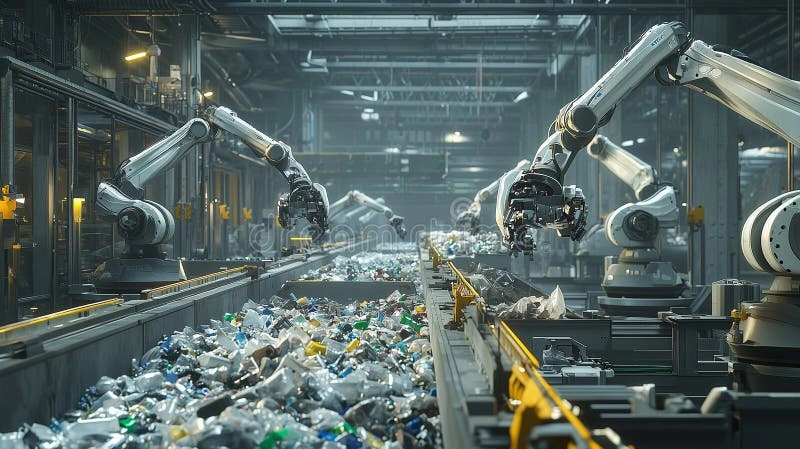
Robotic arms do the physical sorting after computer vision spots the materials. These arms work with AI vision systems and use suction or gripper mechanisms to pick up, sort, and separate waste items. The robots make exact moves based on what the computer vision system tells them. Each item ends up in the right recycling stream.
The numbers show how well these robotic arms work. They sort seven different types of plastic with 95% accuracy and work 2-3 times faster than regular methods. Recycleye Robotics shows this speed in action. Their system makes 33,000 picks over 10 hours – about 55 picks every minute.
These combined technologies create real improvements. Bryson Recycling’s paper line output went up 10% after adding a robotic sorting system. They also hit 99% purity on their split-stream plastics line. A single robot arm at the end of a sorting facility has helped boost recovery rates by 40%-70%.
Accuracy Comparison: AI vs Manual Sorting
The difference between AI and manual sorting becomes clear quickly. Human sorters usually get it right 85-90% of the time. AI-powered computer vision systems hit 95% accuracy consistently. Better accuracy means better quality of sorted materials.
Field tests back up these improvements. Recycleye’s waste-sorting robot made fiber line purity 12% better, reaching 97%. It also boosted aluminum line purity by 8% to 93% and made materials worth 20% more. Yes, it is true that human workers get tired and make different choices throughout their shift. AI systems keep sorting with high precision all day long.
The money savings are impressive too. Alameda County Industries cut labor costs by 59% in three years by using AI sorting robots. AI systems can work non-stop and need very little maintenance. That’s why material recovery facilities looking to streamline their waste management operations find them so valuable.
Smart Collection and Routing with IoT Integration
IoT technology serves as the life-blood of intelligent waste management that changes conventional collection into informed systems. Smart sensors, immediate analytics, and AI algorithms help waste management operations streamline processes while supporting circular economy principles.
Fill-Level Sensors in Smart Bins
Smart bins with IoT sensors are the foundations of modern waste collection systems. These sensors track fill levels immediately and measure fill status, orientation, and temperature every 15 minutes. The technology creates detailed 3D topology maps of bin contents. This helps waste management teams decide the best time to collect waste.
These sensors have proven their worth. Tests in Finnish outdoor conditions lasted over twelve months and showed their reliability in harsh environments. The smart sensors prevent overflow and littering. They detect open lids and send alerts to operators right away. The continuous monitoring helps detect hazardous material burning and ensures environmental compliance.
Dynamic Route Optimization Using Real-Time Data
Smart bins continuously stream fill-level data that changes waste collection from fixed schedules to need-based routes. Collection vehicles now service only the bins that need attention instead of checking every container.
AI-powered optimization algorithms process several variables at once:
- Current traffic patterns and road conditions
- Weather forecasts that might affect accessibility
- Vehicle size restrictions and emission zones
- School times and other temporal factors
Advanced routing platforms use various AI models to find the best collection paths. These include ant colony optimization (ACO), neural networks, and hybrid genetic algorithms. The systems adjust routes immediately when conditions change. This prevents vehicles from getting stuck on inefficient routes.
Fuel and Emission Reductions from AI Routing
AI-optimized routing creates substantial environmental and economic benefits. Studies show intelligent routing can cut fuel consumption by 10-30% based on data quality and system maturity. A sensor-enhanced dynamic collection system cut operational costs by 7.4% compared to traditional methods.
Different AI models show varying efficiency improvements:
- ACO model: 16.3% reduction in fuel consumption
- Neural network model: 19.75% reduction
- Hybrid Genetic Algorithm: 23% reduction (most efficient)
These improvements directly reduce carbon emissions. Documentation shows CO2 decreases of 10.2% through better routing. Fleet metrics with AI indicate vehicles can save 1 gallon of fuel per 189 miles. Simple changes boost these savings even more. Reducing highway speeds from 75 mph to 65 mph saves an extra 18% on fuel with minimal impact on delivery time.
Cities implementing new waste management systems can eliminate unnecessary trips, reduce idle time, and maximize vehicle use. This creates an environmentally responsible foundation for circular waste management initiatives.
Real Industry Case Studies Showing 60% Cost Reduction
Companies worldwide have cut costs by using AI-powered waste management systems that follow circular economy principles. These success stories show how smart technologies in waste operations save money and help the environment.
AMP Robotics Cortex in US Recycling Plants
The AMP Cortex robotic system runs on the AMP Neuron™ AI platform and has reshaped traditional material recovery facilities (MRFs). This smart system sorts recyclables at 80 items per minute with 99% accuracy. It uses the largest known ground dataset of recyclable materials to learn and can sort more than 100 different types of recyclables.
The numbers tell a compelling story. A Virginia recycling center saw its recycled material volume jump 10% after installing this technology. They saved money on hiring and training temporary workers, who are hard to find. Cortex works non-stop, unlike human sorters who need breaks.
Waste Connections stands out as AMP’s biggest customer. They started with 25 robots in their facilities nationwide. The company now runs 50 high-speed robotic systems for plastic, fiber, and residue sorting, making them the industry leader in AI-guided robotics. This growth proves the technology works and pays off.
Singapore’s Smart Waste System and Cost Metrics
Singapore uses Evreka’s SaaS-based waste management platform to make collection smarter. A company handling residential waste in three Pakistani cities achieved remarkable results:
- 89% fewer missed collections
- 65% less management time on missed collections
- 75% reduction in call center costs
- 15% lower operating expenses through better routes
The platform works just as well in 40 other countries. Turkish Red Crescent used Evreka’s solutions for donation boxes and saved 20 hours each month on planning. They also cut collection time by 60%. These savings come from the platform’s complete solution that covers fleet management, operations, and smart sensor tracking.
Oslo’s RecycleHub Community Model
Oslo takes a complete approach to circular waste management that brings together residents and technology. The city aims to cut CO2 emissions in half by 2030 and eliminate them by 2050. They launched an integrated waste system focused on recycling and reuse to reach these goals.
The city introduced a color-coded bag system in 2012. Households put food waste in green bags and plastic packaging in blue ones. This visible system helped people see how much waste they created, and food waste dropped by 5%. A biogas plant processes 50,000 tons of sorted food waste yearly, generating enough power for about 150 busses.
Romerike Avfallsforedling (RoAF) opened what was then the world’s biggest automated waste facility in Oslo in 2016. Using Tomra’s optical detection technology, this facility handles 40 tons per hour and recycles 5,000 tons of material yearly. The city’s recycling rate grew from 33% in 2011 to 37% in 2014, aiming for 50% by 2018.
These examples show how AI and smart systems cut costs through better efficiency, less labor, and improved resource recovery. These elements are the foundations of truly circular waste management systems.
Circular Economy Principles Enabled by AI Waste Management
The circular economy works to eliminate waste by keeping materials in continuous use. AI technologies now play a vital role in this change. They reshape the scene of how we recover, manage, and design products in closed-loop systems.
Closed-Loop Material Recovery Systems
AI-powered systems improve material recovery by finding ways to reuse items. They help create better product designs for recycling and cut down packaging waste. These technologies support resource management priorities. They put reuse first, before remanufacturing, recycling, and disposal. AI uses computer vision to analyze waste streams with amazing precision. It reaches accuracy levels of 98% when sorting different materials.
ZenRobotics shows this ability well. The company uses AI to run smart waste sorting robots. These robots sort everything from plastic packaging to construction waste with great consistency. Notwithstanding that, true circularity needs more than just sorting. Products and materials must keep their highest utility and value at all times.
Extended Producer Responsibility (EPR) Integration
EPR moves waste management responsibility to manufacturers. This encourages better design and recycling practices. AI gives powerful tools that track product lifecycles and ensure companies follow regulations. Blockchain technology improves transparency. It creates secure, tamper-proof records of packaging materials from production through disposal or recycling.
Manufacturers can check if their packaging gets recycled properly. Regulators get accurate data to check EPR rule compliance. Some AI systems have shown great results. Companies that use circular solutions see 25-30% better resource use and cut waste by 40%.
Design for Recyclability and Reuse
AI opens new doors for better product design that supports circular principles. Machine learning helps predict when maintenance is needed. This keeps industrial equipment running well and reduces early disposal. At the same time, generative design algorithms help engineers create products that are easier to fix, recycle, and reuse.
Digital product passports work with AI management systems. They give detailed information about product materials, components, and repair history. This transparency helps with reuse and recycling. People who handle products at the end of their life can make better decisions. This creates a more connected and responsible recycling system.
AI and circular economy principles join to create a powerful cycle. AI enables flexible circular operations while circular models create the data-rich environments that AI runs on.
Challenges and Infrastructure Requirements for AI Adoption
AI technologies show promising results in circular waste management, but organizations face several hurdles before they can tap into their full potential. These challenges include financial barriers and technical infrastructure needs.
Original Investment and ROI Timelines
The cost to implement AI waste management systems remains a big obstacle. Mid-sized waste management companies need USD 50,000 to USD 500,000 at the start. Hardware adds to the expense – smart bins cost USD 200-1,500 each, IoT sensors add USD 50-200 per bin, and AI software subscriptions range from USD 5,000-25,000 per year.
Many companies don’t see the whole picture. Equipment makes up only 60-75% of the total project costs. The ROI formula remains (Total Savings – Implementation Costs) ÷ Implementation Costs × 100, but companies often want quick results. The real benefits take 6-12 months as staff learns and systems get optimized.
Data Standardization and Quality Control
Quality data forms the foundation of working AI waste management systems. AI models need fine-tuning with large amounts of reliable data. The industry’s fragmented operations and history of paper-based management create challenges in data integration.
Companies need strong data governance policies and secure integration processes. Every information-driven waste management solution must stay transparent and explainable to meet compliance standards.
Training Workforce for AI System Operations
The workforce’s development creates another challenge. Teams need 2-4 weeks of training at first, plus ongoing support. A detailed training program costs between USD 2,000-10,000.
The training must cover simple AI literacy, system integration, data analysis, and predictive maintenance. Companies need to invest in continuous learning programs. This helps prevent resistance from teams who aren’t used to AI tools.
Conclusion
AI-powered waste management is reshaping the circular economy and helps solve our global waste crisis. These technologies have proven to cut costs by 60% through various improvements in efficiency. Computer vision systems sort with 95% accuracy, which works better than manual methods, and robotic arms process materials faster than humans ever could.
Smart collection systems with IoT sensors cut unnecessary trips and reduce fuel usage by 30%. These systems also lower operational costs. Real-life examples show clear benefits – Alameda County Industries reduced labor costs by 59%. Companies that use Evreka’s platform saw 89% fewer missed collections and spent 75% less on call centers.
The systems do more than save money. They make true circular economy possible through better material recovery, EPR integration, and improved design. Companies that use these solutions report 25-30% better resource use and create 40% less waste.
Some challenges exist. Companies need large upfront investments, quality data, and worker training. The benefits of AI-powered waste management become clearer each day. We create 2 billion tons of global waste every year and need innovative answers. AI technologies offer a way toward green practices while saving money.
This tech revolution goes beyond just making things work better. It changes how we think about waste – not as trash but as valuable resources in a circular system. AI waste management will play a vital role in creating a greener future as we keep developing and using new solutions.